Blood Pressure Diary
- 4.8
- Rating
- 1.00M
- Installs
- Free
- Price

 Analysis by App-foxy
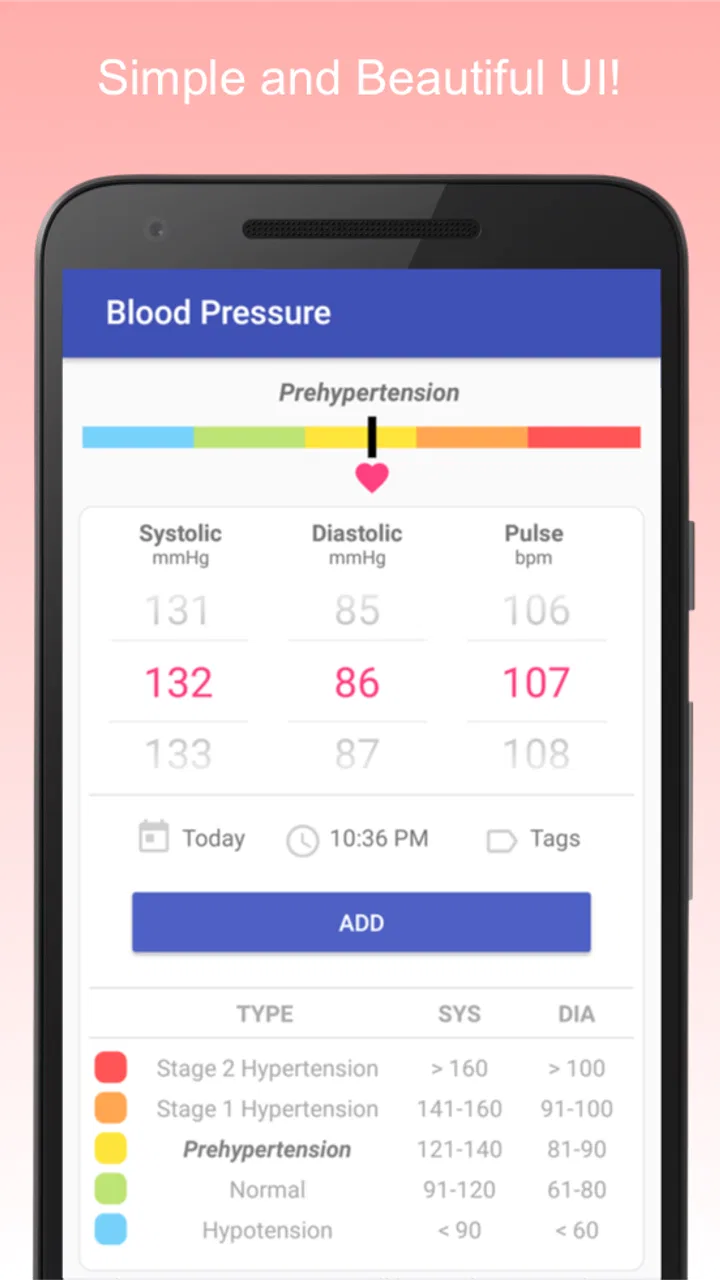
I spent time with Blood Pressure Diary as a straightforward medical tracking app, and its appeal is easy to understand: it focuses on recording blood pressure and pulse without trying to become a full health platform. That narrow purpose can be useful when you want a simple place to keep readings together, especially if you are trying to notice patterns over time or prepare clearer information for a healthcare appointment.
The app is developed by Health & Fitness AI Lab and is available free of charge. It is rated for Everyone, which fits its uncomplicated tracking role, and it runs on devices using Android 10 or later. Its current version is 0.1.20. I would describe it as a personal log rather than a diagnostic tool: it can help organize measurements, but it cannot replace a clinician, a validated blood-pressure monitor, or urgent medical advice.
How Blood Pressure Diary fits into everyday health tracking
The first thing I noticed is that the app’s usefulness depends less on complicated technology and more on whether I actually enter readings consistently. A blood pressure diary only becomes meaningful when the entries are made under reasonably similar conditions. If I measure immediately after climbing stairs one day and after sitting quietly the next, the numbers may be difficult to compare. The app gives that record a home, but I still have to create a sensible routine around it.
You May Also Like

 Blood Strike: 2.5 Anniversary
Blood Strike’s Loadouts Turn Every Drop Into a Tactical Gamble
A close look at Blood Strike’s custom loadouts: how fast access to signature weapons reshapes its battle royale rhythm, rewards preparation, and narrows the gap between fights.

 Pandora - Music & Podcasts
Pandora’s Music Is Easy to Start, but Harder to Recover
Pandora’s strength is its low-effort path from a seed to a station. Its weak spot is how much confidence it asks you to place in connection, setup, and quiet recovery.

 8 Ball Pool
 Is Built on Rivalries, Rematches, and Routine
A close look at the rivalries, rematches, shared routines, and unanswered safety questions that turn a quick pool match into a persistent mobile community.

 Samsung Music
’s Quiet Strength Is Playing What You Already Own
Its reach comes less from spectacle than from dependable access to a personal library. That simplicity is both the app’s strongest retention engine and its ceiling.

 AccuWeather: Weather Radar
AccuWeather Review: A Quick, Clear Forecast for Everyday Decisions
For everyday plans, the best forecast is the one you can understand quickly. AccuWeather makes rain timing, radar, and local conditions easy to act on, with a few trade-offs.

 Hill Climb Racing
Why Hill Climb Racing Still Turns Crashes Into One More Run
A tiny car, a bumpy hill and one more upgrade: Hill Climb Racing keeps resurfacing because its simple chaos makes every near-miss feel personal.
More From Our News Desk
View All News


For me, the most practical approach is to choose a repeatable moment, such as before breakfast or in the evening, sit quietly for a few minutes, and then record the result along with the pulse reading. That routine turns scattered numbers into a timeline. It also makes it easier to remember what happened between appointments instead of relying on memory or loose notes in a phone app.
This is where the app feels more appropriate than a general notes application. A notes app can store anything, but it does not feel purpose-built for blood pressure and pulse. On the other hand, the focused design means I would not expect it to manage every part of my health history. Someone looking for medication reminders, exercise planning, nutrition analysis, or a broad medical record may find the experience too limited.
What the free price means in practice
The clearest value point is that the app is free. That makes it easy to try without committing money to a subscription or a one-time purchase. For a person who only needs a place to log readings, free access removes a major barrier. It is also useful for someone who wants to test whether a digital diary fits their routine before investing in a more elaborate health service.
Free does not automatically mean complete, though. The price tells me that I can access the app without paying, but it does not turn the app into a medical device or guarantee that it will cover every workflow I might want. The real value comes from how reliably I can use it and whether its simple approach matches my needs. If I only need an organized record, the cost is hard to argue with. If I need advanced analysis or integration with other health tools, I would compare it carefully with alternatives before making it my only system.
There is also a practical distinction between free access and clinical usefulness. A free log can help me bring better information to a consultation, but the healthcare professional still has to interpret that information in context. I would never use the absence of a warning inside a diary as evidence that a reading is safe. When a measurement is concerning or symptoms are present, the correct next step is medical guidance, not simply adding another entry.
The strengths of keeping a focused record
The strongest part of this app is its focus. Blood pressure can be easy to forget because each reading is brief, while the useful insight often comes from several readings collected across days or weeks. A dedicated diary encourages me to treat the numbers as a sequence rather than isolated events.
That matters in an everyday situation. Imagine checking my pressure at home before a scheduled appointment, then trying to remember the results from the previous week. I might recall only the highest or most recent number. With a dedicated record, I have a better chance of bringing a more complete picture. Even if the app does nothing more than make recording convenient, that can be a meaningful improvement over scraps of paper or a conversation based on memory.
A second useful insight is that consistency is more valuable than excessive logging. Recording many readings in a rushed or inconsistent way can create a noisy record. I would rather use the app at a calm, repeatable time and note unusual circumstances separately when relevant. For example, a reading taken after unusual exertion should not automatically be treated as equivalent to one taken after rest. The app can hold the entries, but good interpretation starts with good measurement habits.
A third advantage is portability. A paper diary can work, but it can be misplaced, damaged, or left at home. A phone-based record is more convenient when the phone is already part of my daily routine. That convenience is especially helpful for people who have been told to monitor their blood pressure for a period and want a low-effort way to keep up with it.
Where the simple approach becomes a limitation
The same simplicity that makes Blood Pressure Diary approachable may frustrate users who want a connected health dashboard. I would not choose it expecting a complete medical management system. The app is centered on blood pressure and pulse, so people who want to combine weight, glucose, oxygen levels, medication schedules, symptoms, and activity in one place may prefer a broader health application.
I would also avoid treating the app as a replacement for the monitor itself. The readings still come from the blood-pressure device I use. If that device is poorly fitted, used incorrectly, or not suitable for the situation, the diary cannot correct the measurement. A useful workflow is to make sure the cuff fits properly, rest before measuring, keep the arm positioned as recommended, and enter the result carefully. The app’s role begins after the measurement has been taken.
Another trade-off is that a focused log may require more personal discipline than a system that automatically imports readings. If I forget to open it, the record develops gaps. If I already use a connected monitor with automatic synchronization, a separate manual diary could feel like extra work. In that case, an alternative with direct device integration may be more convenient, even if it is less simple or comes with a different cost model.
I also think about how much context I need around each entry. A number on its own is not the whole story. Sleep, stress, caffeine, exercise, illness, and medication timing can all affect how a reading should be understood. If the app’s focused entry process does not match the amount of context I want to preserve, I may need a separate note-taking method. That is not necessarily a flaw, but it is an important practical limitation before I rely on the diary for detailed self-observation.
Who is likely to get the most value
This app makes the most sense for someone who has access to a home monitor and wants a dedicated place to record blood pressure and pulse. It is also a reasonable starting point for a person who has never kept a digital health log and does not want to learn a large, complicated platform. The free price makes experimentation easy, and the Everyone rating makes the app suitable for a broad audience from an access perspective.
I can also see value for caregivers helping a family member maintain a routine. The important condition is that the person entering the readings must do so accurately and consistently. A caregiver should not assume that a neatly stored number is automatically reliable. The measurement technique, device quality, timing, and surrounding symptoms still matter.
People preparing for a medical visit may find the app particularly useful. Rather than arriving with a vague statement such as “my pressure has been high lately,” I can review the entries I made and describe when they were taken. That gives the conversation a stronger starting point. It does not diagnose anything, but it can make the appointment more concrete and reduce the chance that an important pattern is forgotten.
New smartphone users may appreciate the narrow purpose as well. A large health platform can offer more features while also creating more places to tap, configure, and interpret. Blood Pressure Diary is better suited to someone who values a direct path from measurement to record. The trade-off is that this user may eventually outgrow it if their tracking needs expand.
Who should choose another option
I would skip this app as my main solution if I need automatic data transfer from a blood-pressure monitor, extensive health dashboards, or a single location for many kinds of medical information. In that situation, a connected monitor ecosystem or a more comprehensive health-record app may save time. The better choice depends on whether convenience, integration, and analysis matter more to me than a focused free diary.
I would also look elsewhere if my priority is active medical guidance. A tracking app can organize information, but it should not be confused with a service that provides professional review or emergency support. Anyone experiencing severe symptoms or worrying readings should follow appropriate medical advice rather than waiting for the diary to explain them.
Finally, people who dislike manual entry may not enjoy the routine. The app’s central benefit assumes that I will open it and record the result. If I know I will abandon that habit after a few days, a device or service that records measurements automatically may deliver more real-world value, even if it is less minimal.
My verdict on value and everyday usefulness
After weighing the free access against its focused scope, I see Blood Pressure Diary as a sensible choice for basic personal tracking. Its value is not in replacing medical equipment or offering a complete health-management system. Its value is in giving blood pressure and pulse readings a dedicated place, making a consistent record easier to maintain than memory alone.
The app has also built a strong public response, with a 4.8 average from around 124 thousand ratings and more than one million installs. Those figures suggest that the simple concept resonates with many users, although popularity should not be mistaken for clinical validation. I would judge it by whether it helps me keep accurate, regular records and whether those records are useful in a conversation with a healthcare professional.
My recommendation is straightforward: try it if you want a free, narrowly focused diary and already have a reliable way to measure your blood pressure. Before settling into it, decide when and how you will take readings, and keep the routine consistent. If you need automatic synchronization, detailed context, medication management, or a wider health picture, choose a more specialized or comprehensive alternative instead.
In my experience, the best reason to use Blood Pressure Diary is not that it promises to interpret my health for me. It is that it can help me arrive at an appointment with a clearer record and a better understanding of my own measurement habits. For a free medical tracking app, that is a modest goal, but it is a useful one when the app’s simplicity matches the job I actually need it to do.
FAQs for Blood Pressure Diary
01What features does Blood Pressure Diary offer?
Blood Pressure Diary provides comprehensive features for tracking and managing your blood pressure readings. Users can log their systolic and diastolic values, track heart rate, and view detailed charts and statistics. The app also allows you to set reminders for taking medication and offers the ability to export data for sharing with healthcare professionals.
02Is the Blood Pressure Diary app free to use?
Blood Pressure Diary offers both free and premium versions. The free version includes basic features such as logging and tracking blood pressure readings. However, to access advanced features like detailed analytics, cloud backup, and ad-free experience, users may need to upgrade to the premium version through an in-app purchase.
03How does Blood Pressure Diary ensure data privacy?
Blood Pressure Diary prioritizes user privacy by implementing strong data encryption methods. The app ensures that personal health information is securely stored and not shared with third parties without explicit consent. Users have the option to back up their data to secure cloud storage, providing additional peace of mind.
04Can Blood Pressure Diary integrate with other health apps?
Yes, Blood Pressure Diary is designed to integrate seamlessly with other health apps and devices. It supports syncing with popular health platforms like Google Fit and Apple Health, allowing users to consolidate their health data in one place. This integration helps in creating a comprehensive view of your overall health status.
05Does Blood Pressure Diary provide medical advice?
No, Blood Pressure Diary does not provide medical advice. It is designed as a tool to help users track and manage their blood pressure readings. For medical advice, diagnosis, or treatment, users should always consult a qualified healthcare professional. The app’s data can be shared with doctors to aid in medical consultations.
Pros
- User-friendly interface for easy tracking.
- Customizable alerts for reminders.
- Comprehensive data analysis tools.
- Seamless integration with health apps.
- Secure data storage with cloud backup.
Cons
- Limited free features available.
- Ads can be intrusive at times.
- No option for manual data import.
- Requires internet for full functionality.
- Limited language support beyond English.

Blood Pressure Diary
Gallery